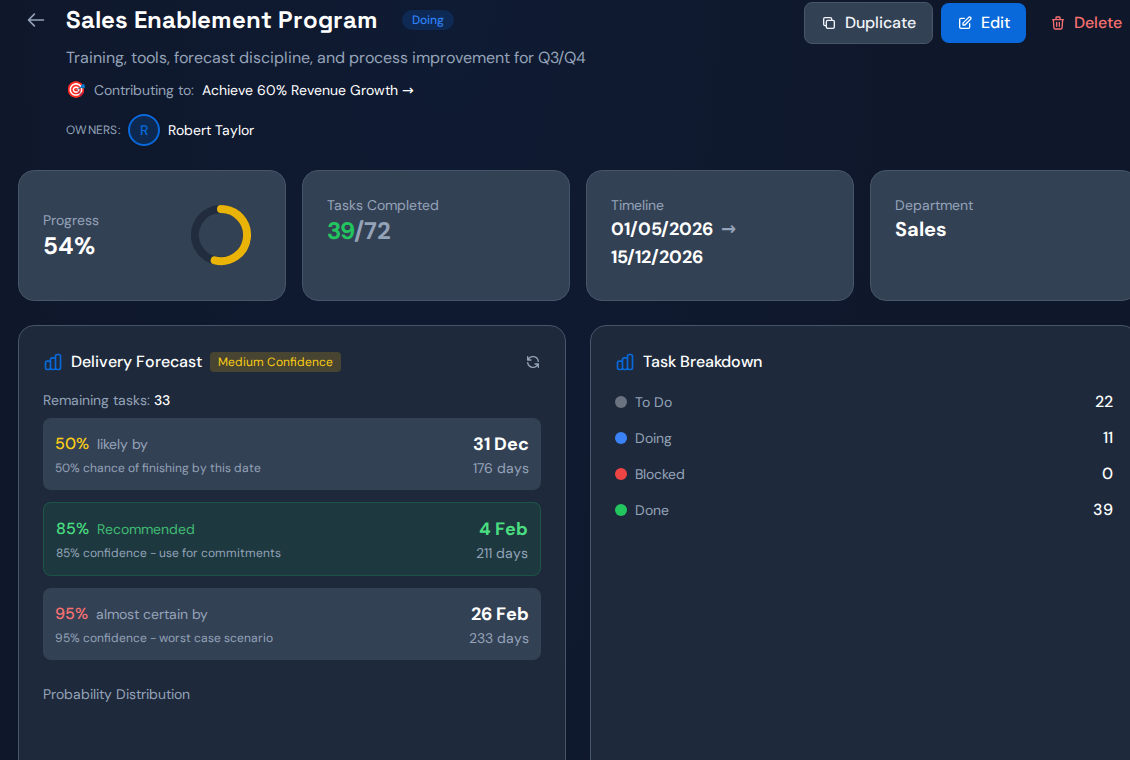
Key takeaways
- Revenue execution connects pipeline value to the seller work, internal support, handoffs, and constraints required to realize it.
- A CRM records opportunities; an execution system shows whether the responsible work is moving and what leadership should change next.
- The weekly revenue review should produce one owned action against the highest-value execution constraint, then verify movement.
Revenue execution is the operating discipline that turns pipeline potential into completed customer and company outcomes. It lives between the forecast and the work. That space includes discovery, follow-up, proposals, approvals, security review, pricing decisions, implementation readiness, and every internal handoff a seller needs to move the deal.
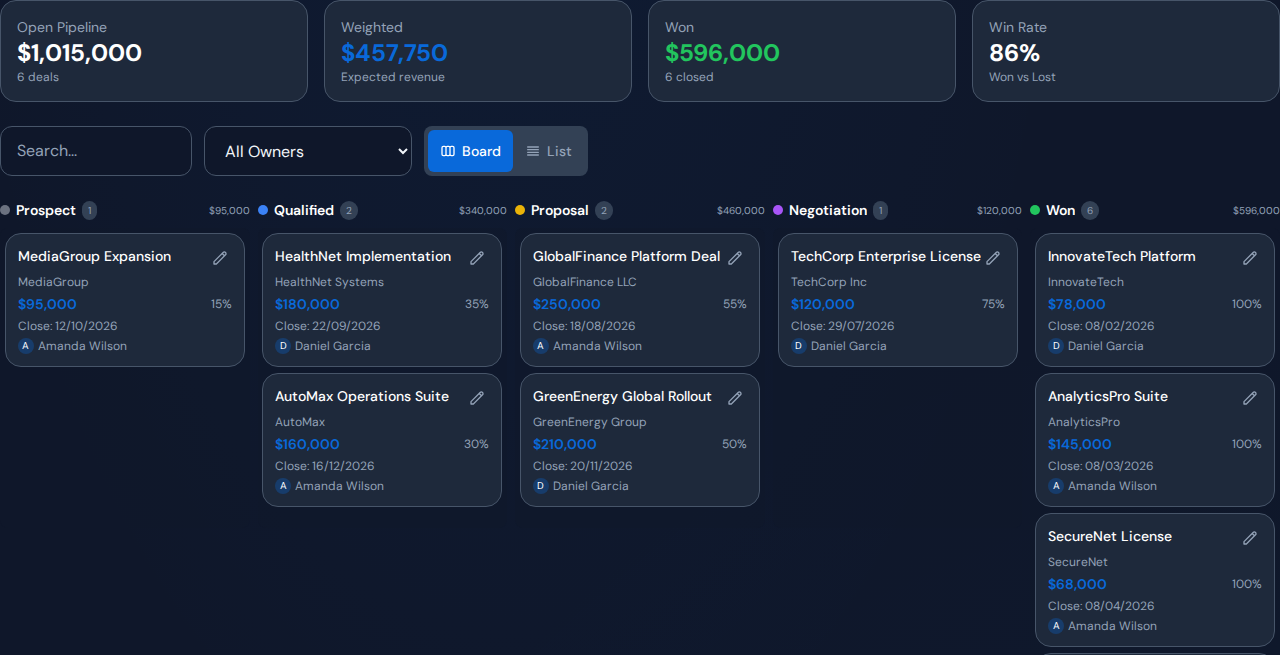
Most revenue systems show the commercial record but not the execution system behind it. A deal has an amount, stage, probability, owner, and close date. The next action may be hidden in a note. Internal tasks live elsewhere. The proposal queue belongs to another team. The forecast looks precise while the work required to earn it remains fragmented.
Revenue execution management closes that gap. It connects opportunities to tasks, people, workload, goals, constraints, and accountable next actions. A CRO can see seller results alongside workload, deal, and task context, inspect the work behind the signal, and determine whether coaching or company support will move revenue.
What is revenue execution management?#
Revenue execution management is the coordinated process of turning qualified demand into predictable revenue by connecting commercial stages with the work, owners, dependencies, and capacity required at each stage. It includes seller execution and the cross-functional operating system around sellers.
The distinction matters because many revenue failures are not pipeline-generation failures. Deals can stall after strong discovery because follow-up is late, proposal support is overloaded, legal review waits, technical validation lacks an owner, or implementation capacity changes the commercial decision.
A revenue execution platform should make those conditions visible while the opportunity can still move. It should preserve the path from company target to pipeline, seller, deal, task, dependency, constraint, and next action.
A forecast is a claim about future execution. Inspect the work required to make the claim true.
Why a CRM is necessary but not sufficient#
The CRM is the system of record for accounts, contacts, opportunities, stages, amounts, and sales history. It is essential. It is not designed to become the full company operating system behind every revenue commitment.
When execution is separate, forecast meetings become interpretation battles. Sellers update stage and confidence. Managers ask for next steps. RevOps checks hygiene. Internal teams receive requests through messages and meetings. Nobody sees one connected queue of work and blocked value.
Revenue execution software should complement the CRM by connecting commercial objects to owned work and company context. The opportunity remains in the CRM. The execution command center shows whether it has credible next actions and whether a shared constraint affects several deals.
| System | Primary job | Question answered |
|---|---|---|
| CRM | Record customer and opportunity data | What is in the pipeline? |
| Sales engagement | Coordinate outreach sequences | Which prospect actions are happening? |
| Revenue intelligence | Analyze calls, activity, and forecast signals | What pattern is present? |
| Revenue execution management | Connect pipeline to work, owners, constraints, and action | What must the company move next? |
Build the revenue execution chain#
The operating chain is Revenue goal → Pipeline → Deal → Work → Owner → Constraint → Next action → Revenue movement. Each link prevents a forecast from becoming a detached number.
The goal establishes the expected outcome and timeframe. Pipeline shows potential. The deal establishes customer context. Work shows the concrete movement required. Owners create accountability. Constraint analysis identifies what limits progress across opportunities. The next action creates commitment. Movement verifies whether the intervention mattered.
Commandix connects these operating layers so leadership can start from the revenue signal and reach the responsible execution evidence without assembling a custom report.
Use leading revenue execution signals#
Booked revenue is definitive and late. Pipeline value is useful and uncertain. Leading execution signals reveal whether opportunity movement is becoming more or less likely. These include stage age, overdue next actions, deal-task completion, blocked internal work, owner workload, proposal queue age, and repeated handoff delay.
Connect each signal to value. An overdue low-value follow-up may require normal management. A technical review blocking several strategic opportunities may deserve executive constraint action. Weighted value, customer importance, and close timing help establish priority.
Avoid multiplying alerts. The purpose is not to make every stale field red. It is to identify where one management decision can protect the most revenue.
Revenue execution signals
- Every material deal has a current, owned next action.
- Stage age is compared with the expected sales motion.
- Overdue seller work is separated from blocked internal work.
- Weighted value is connected to task and dependency evidence.
- Seller workload and opportunity allocation are visible.
- Repeated support queues are evaluated as company constraints.
- The next review checks actual movement, not updated confidence alone.
Identify high and low sales performance in two clicks#
Executives need a fast route to seller performance. From the Commandix dashboard, leadership can open the Sales department and inspect people or tasks. The view reveals seller results alongside workload, deal, and task context for the period and provides the operating context behind the comparison.
Do not stop at rank. Open the seller evidence. Compare pipeline quality, won value, active load, overdue follow-up, stage movement, and internal blockers. A low result may reflect weak execution, an immature book, or support delay. A high result may reveal a repeatable method or a top performer carrying an unsustainable share of the team.
The purpose of speed is earlier coaching and support, not faster blame. A two-click signal should lead to a more informed conversation.
Connect deal tasks to forecast credibility#
A deal without a next action is an opinion. Deal tasks make the commercial plan inspectable. Owners, due dates, status, priority, and dependencies show whether the opportunity has active execution behind it.
Review unfinished work by value and timing. Which tasks block the next stage? Which internal owners appear across several deals? Which high-probability opportunities have weak follow-through? Which close dates assume work that has not started?
Task evidence should remain one controlled drill-down away from the executive view. The CRO does not need to manage every task. The CRO needs confidence that the forecast rests on owned, moving work.
Find the cross-functional revenue constraint#
Revenue constraints frequently sit outside Sales. Proposal support, technical validation, security review, pricing approval, legal negotiation, onboarding capacity, and executive decisions can limit several opportunities. Pushing sellers harder can feed more work into the constrained queue.
Look for repeated waiting and blocked value. If multiple deals depend on one stage or owner, compare queue age, workload, and business impact. Protect the constrained capacity, improve input readiness, sequence by value, and pause lower-priority demand when necessary.
Elevate only after using current capacity well. Add authority, automation, training, supplier support, or headcount when evidence shows the constraint remains material.
Execution behavior or capacity at the opportunity owner limits movement.
A shared internal team or approval queue limits several opportunities.
Demand quality or customer timing limits revenue despite healthy execution.
Run a weekly revenue execution review#
Begin with target, open pipeline, weighted value, and movement since the last review. Focus on changed and high-value exceptions. Inspect seller and deal work where the signal is weak. Identify the current revenue constraint. Review the previous action and assign the next one.
The meeting should not become a recital of every opportunity. Stable deals stay quiet. Attention goes to forecast risk that leadership can influence. Every escalated item receives an owner, due date, and expected movement.
At the next review, check stage movement, completed work, queue age, blocked value, and forecast change. If the action produced no movement, test a different diagnosis.
Implement revenue execution management in 30 days#
Week one defines the revenue goal, pipeline stages, ownership rules, and required next-action standard. Week two connects material opportunities to seller and internal work. Week three identifies the first repeated revenue queue and runs a constraint action. Week four compares movement and tightens the review cadence.
Start with material deals rather than importing every historical activity. Keep the executive layer selective. Agree which system remains authoritative for opportunity data and which system owns cross-functional actions.
Measure adoption through forecast conversations. Fewer unsupported opinions, earlier blocked-work escalation, clearer owners, and more reliable next actions indicate progress.
Measure the business value of revenue execution#
Track stage age, overdue next actions, time waiting on internal teams, weighted value unblocked, seller coaching latency, and forecast variance. The objective is not simply more activity. It is faster, more credible movement of qualified revenue work.
The sales team performance dashboard examples show the seller drill-down and operating evidence. The bottleneck identification software guide explains how repeated queues become system constraints.
Commandix makes pipeline part of the company operating system. Leadership can see the revenue signal, inspect the responsible work, identify the constraint, assign one owner, and verify movement. That is how a forecast becomes executable.
Open Commandix to inspect pipeline, sellers, deal tasks, internal queues, constraints, owners, and next actions.
Open live workspace
Frequently asked questions#
What is revenue execution?#
Revenue execution is the coordinated work that turns qualified pipeline into completed revenue by connecting opportunities, seller actions, internal dependencies, owners, constraints, and next steps.
How is revenue execution management different from a CRM?#
A CRM records customer and opportunity data. Revenue execution management connects that pipeline to the cross-functional work and constraint actions required to move it.
Which revenue execution metrics should leaders track?#
Track stage age, weighted value, owned next actions, overdue deal work, blocked internal tasks, seller workload, queue age, forecast movement, and won revenue.
Who owns revenue execution?#
The CRO or revenue leader owns the outcome, but sellers, RevOps, marketing, product, legal, security, finance, implementation, and executives may own work inside the revenue system.