CommandiX Open demo

Revenue execution

Sales Team Performance Dashboard: From Pipeline Theater to Revenue Execution

A sales team performance dashboard should connect pipeline, deal work, seller workload, overdue tasks, and team performance so leaders can act fast.

Sales team performance
Sales team performanceSee who is winning, who is overloaded, and where execution work needs attention.

A sales dashboard should make leaders feel dangerous in the best possible way: clear, focused, and ready to act. Too many sales dashboards do the opposite. They show pipeline numbers, colorful stages, and forecasts that look impressive until the quarter gets real. Then everyone asks the same questions. Who is actually moving deals? Which opportunities have no next action? Which seller is overloaded? Which follow-ups are late? Which internal tasks are slowing revenue?

A sales team performance dashboard should not be pipeline theater. It should be revenue execution. That means pipeline, people, tasks, workload, overdue work, and operating constraints must live close enough together for leaders to move from signal to action quickly.

The problem with isolated CRM dashboards

CRMs are excellent systems of record for customer and opportunity data. But revenue does not move only because a stage field changes. Revenue moves because people do work: discovery, follow-up, proposal creation, legal review, implementation planning, executive alignment, renewal preparation, and handoffs. If that work is disconnected from the operating system, leadership sees pipeline but not execution reality.

This is where sales leaders get surprised. The forecast says a deal is alive, but the proposal task is overdue. The pipeline says there is enough coverage, but one seller is carrying too many active tasks. The CRM says a deal is in negotiation, but internal delivery readiness is blocked. The numbers are technically visible, yet the constraint is hidden.

What sales leaders need to see

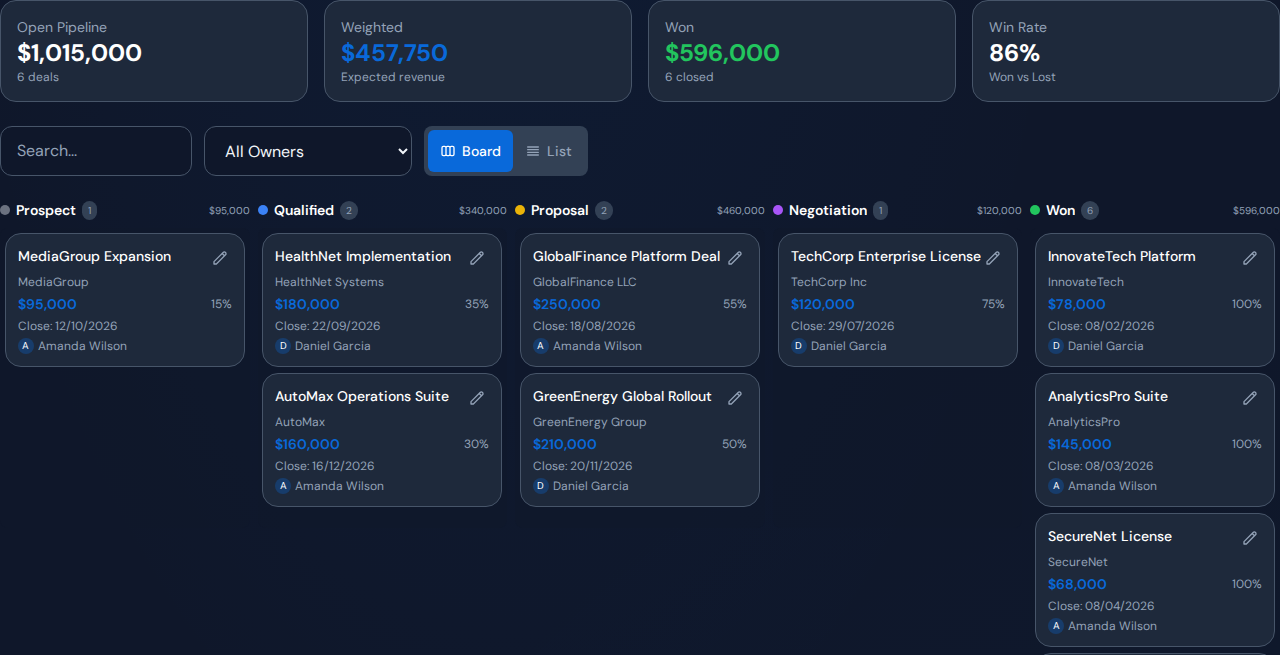
At minimum, a sales performance dashboard should show open pipeline, weighted revenue, won value, win rate, active deals, seller ownership, overdue deal tasks, and expected close dates. But the better dashboard goes further. It shows whether sales work is connected to goals. It shows whether the sales team is overloaded. It shows who is creating throughput and who needs support. It shows the execution behind the forecast.

That is the difference between managing numbers and managing revenue movement. A VP Sales does not need another chart to admire. They need to know what to fix before the quarter slips.

Pipeline execution
Pipeline executionOpen pipeline, weighted revenue, deal stages, owners, and sales execution context.

The two-click executive route

Commandix makes sales performance part of the company command center. From the main dashboard, leadership can open Sales and inspect department performance, task breakdown, team members, and sales history. That means the CEO can move from a weak company number to the sales team behind it without waiting for a custom report.

The sales team performance view shows the human reality behind revenue. Robert, Amanda, Daniel, or any team member can be compared on completion, active load, overdue work, and deal movement. This is powerful when used responsibly. The goal is not to shame people. The goal is to reveal where the system needs support, focus, coaching, or capacity change.

Best and worst performers, handled correctly

Seeing who performs best and worst is valuable, but only if leadership understands context. A seller with lower completed task count may own larger, more complex deals. A seller with many overdue tasks may be overloaded because they are the person everyone trusts with critical accounts. A seller with high activity may still be moving low-quality pipeline. The dashboard should start the investigation, not end it.

Commandix helps because performance is not isolated from work. Leaders can inspect tasks, deals, workload, and unit context. That makes the conversation better. Instead of "why are you behind?" the manager can ask, "what is blocking these follow-ups, and what should we remove so you can close?"

Revenue execution loop
Revenue execution loopA generated revenue operating loop that connects pipeline signal to seller work and leadership action.

Revenue constraints

A sales team can have constraints just like an engineering team. The constraint might be lead quality, proposal support, legal review, demo capacity, executive sponsorship, implementation confidence, or seller focus. If a company treats every revenue problem as "do more outreach," it may increase noise without increasing throughput.

Commandix is valuable because it connects sales to the broader execution system. If open pipeline is strong but weighted revenue is weak, leaders can inspect deal stages. If deals are active but tasks are overdue, they can inspect seller workload. If a seller is overloaded, they can subordinate lower-value work. If proposal support is the constraint, they can elevate capacity there instead of blaming sales.

What to review every week

A strong sales execution review asks six questions. What changed in open pipeline? What changed in weighted revenue? Which deals have no next action? Which seller is overloaded? Which sales tasks are overdue? Which internal constraint is slowing deal movement?

Those questions create a better meeting. The team stops reciting pipeline stages and starts managing the work that moves revenue. Leaders can see where help is needed. Sales managers can coach with evidence. Executives can unblock cross-functional dependencies before they become lost deals.

Sales unit overview
Sales unit overviewOpen Sales from the dashboard and inspect department execution in seconds.

The business value

The value is not merely better visibility. The value is faster revenue intervention. If a deal is drifting, the system shows the work. If a seller is overloaded, the system shows the load. If the sales team is underperforming, leaders can drill into team, person, task, and deal context. That saves time, protects focus, and turns revenue reviews into action reviews.

Sales is too important to live in a separate reporting silo. Pipeline is part of execution. Deals create work. Work creates constraints. Constraints decide throughput. A sales team performance dashboard that understands that chain gives leaders a real advantage.

Why revenue leaders need execution context

Revenue misses rarely come from one clean cause. A deal may be late because the seller is overloaded, the proposal is waiting on product input, the customer champion has gone quiet, legal review is slow, or internal implementation capacity is uncertain. A sales dashboard that only shows pipeline stage is blind to much of that reality.

Execution context makes the forecast more trustworthy. If a high-value opportunity has no next action, the system should reveal it. If the best seller is carrying too many overdue tasks, leadership should know before the person burns out or the deal cools. If several deals wait on the same internal support role, that support role may be the revenue constraint.

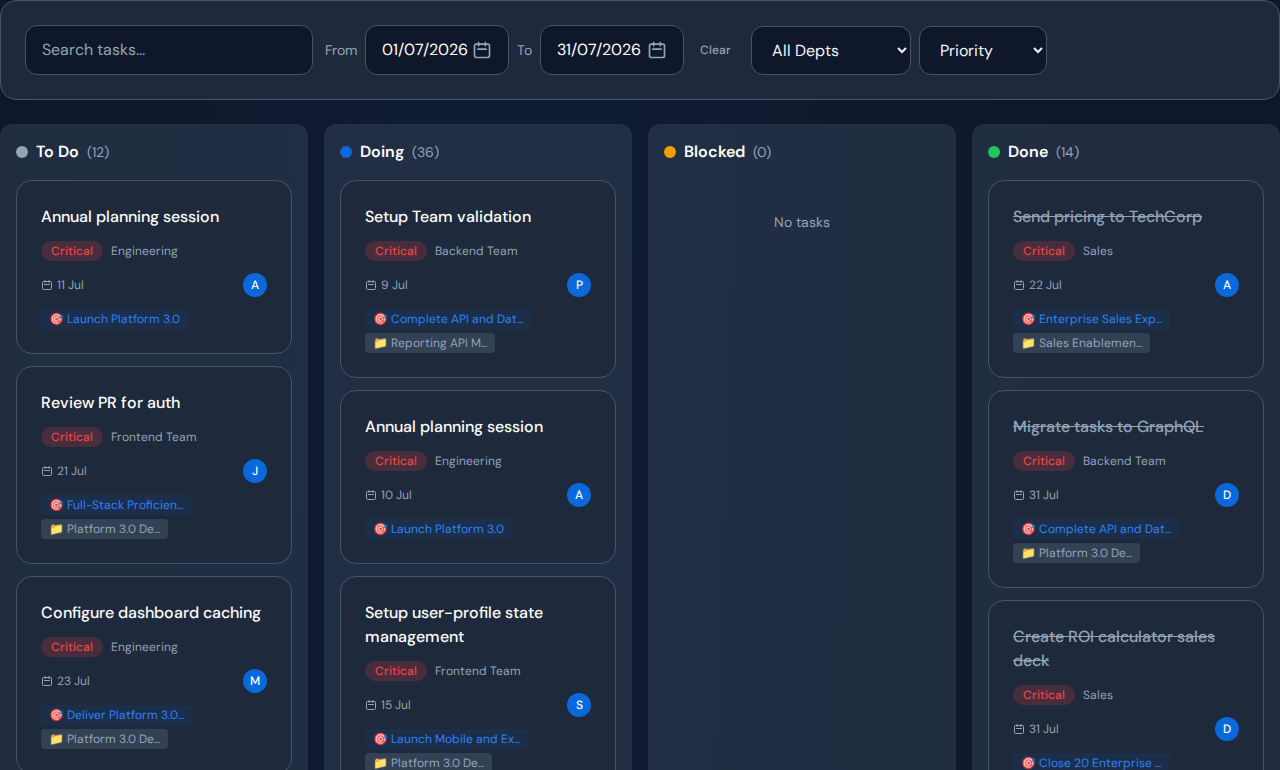
Sales tasks
Sales tasksSee the actual operating work behind pipeline movement.

The Commandix revenue operating move

Commandix makes revenue part of the same operating system as goals, teams, and tasks. From the dashboard, leaders can open Sales, inspect team performance, view sales work, and connect pipeline movement to execution health. This gives the CEO and CRO a faster path from concern to intervention.

The business value is practical and immediate: fewer stale deals, clearer seller coaching, better support for overloaded people, and faster detection of the internal work slowing revenue. Sales performance stops being a number on a slide and becomes a system leaders can actually improve.

The weekly revenue execution review

A strong sales performance review should take less time and create more action. Start with pipeline value and expected close dates. Then open the sellers behind the pipeline. Who has too many active follow-ups? Which deals have overdue tasks? Which proposal or legal steps are waiting on internal support? Which seller is producing strong throughput, and which seller needs capacity, coaching, or a cleaner territory?

The point is not to turn sales leadership into surveillance. The point is to remove the friction that prevents good sellers from winning. If Amanda has the highest-value deals and the most overdue proposal tasks, that is not a personal failure signal by itself. It may be a capacity signal. If Robert closes smaller deals quickly while enterprise opportunities stall elsewhere, that may reveal a coaching opportunity or a process constraint.

Commandix gives revenue leaders this context in the same system as company execution. Sales is no longer a separate island of numbers. It is part of the operating machine. The business benefit is sharper forecasting, faster deal rescue, better use of seller time, and fewer ugly surprises at the end of the quarter.

Executive command center
Executive command centerGoals, departments, revenue, throughput, and operating signals in one leadership view.

The revenue benefit in plain language

The revenue benefit is fewer deals dying from invisible execution drag. A deal with no next action is not a forecast; it is a risk. A seller with too many overdue follow-ups is not just busy; they may be the constraint on revenue movement. A proposal waiting on internal input is not just an internal task; it is customer momentum leaking away.

Commandix makes those signals visible beside the broader company operating system. That matters because sales work often depends on product, operations, legal, finance, and implementation. When the dashboard connects the seller, deal, task, and internal constraint, revenue leaders can rescue opportunities earlier and coach with much better context.

The result is a sales review with more pulse. Less guessing. Less end-of-quarter panic. More specific action on the work that can actually move revenue.

Frequently asked questions

What should a sales team performance dashboard show?

It should show pipeline value, weighted revenue, win activity, seller workload, overdue work, deal stages, and execution tasks.

Why is CRM reporting not enough?

CRM dashboards often show pipeline status but not the cross-functional work, overdue tasks, or operating constraints that affect revenue movement.

Can Commandix replace a CRM?

Commandix is not positioned as a full CRM replacement. It connects revenue execution to the broader company operating system.

See the operating system behind the article.Open Commandix demo