Before Approving Headcount, Check What Work Is Actually Waiting

A practical headcount review that separates a real capacity shortage from excess work in progress, rework, poor inputs, and avoidable policy delay.

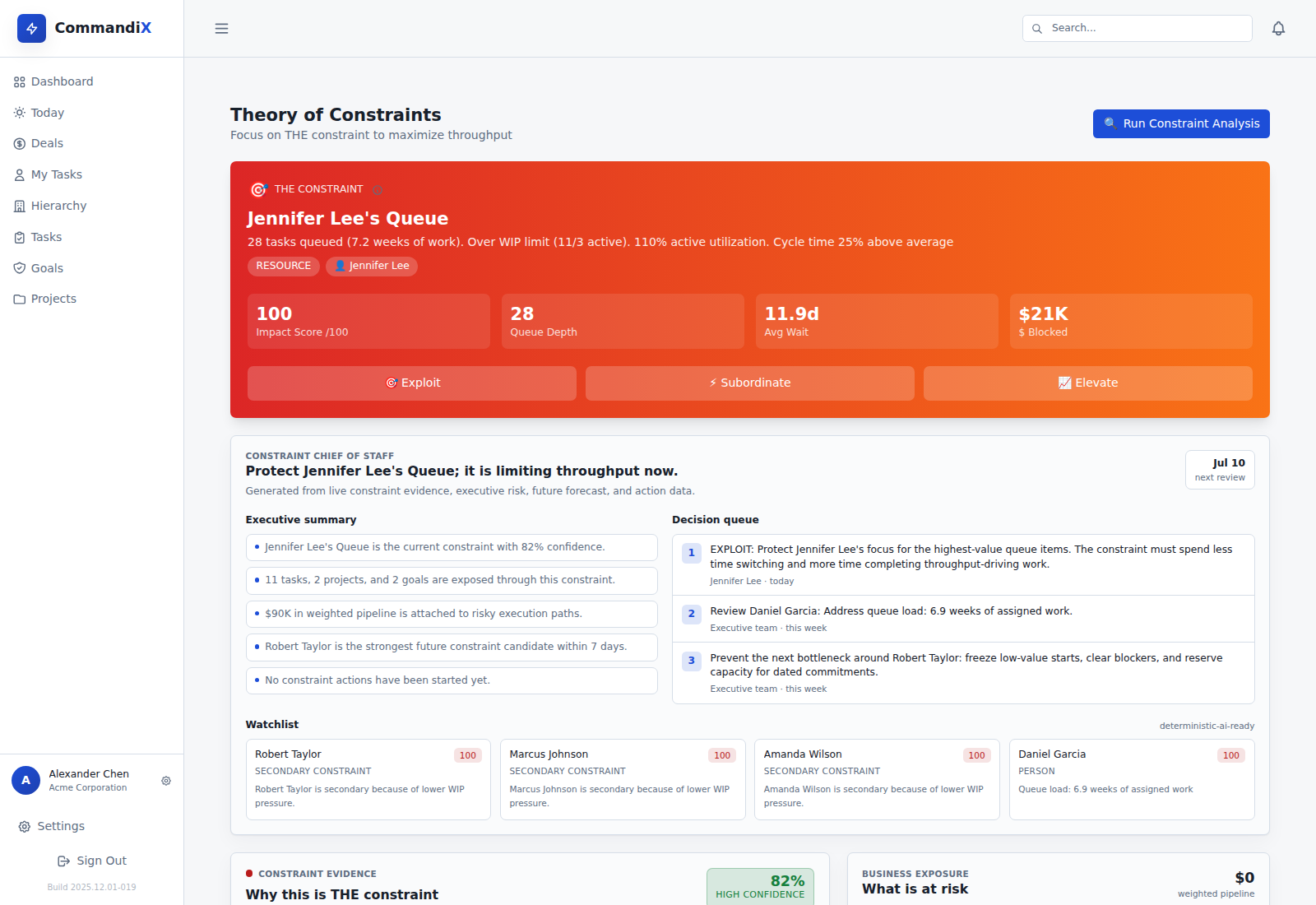
Workload and flow evidence in Commandix for headcount decision, showing Sample data shows current load, queues, waiting work, and completed flow in one review.
Workload and flow evidenceSample data shows current load, queues, waiting work, and completed flow in one review.
On this page

Key takeaways

  • A busy team is not automatically short of capacity.
  • Separate clean, prioritized demand from rework, interruptions, and work that should be stopped.
  • Approve headcount when the remaining queue still exceeds qualified capacity and the expected result is measurable.

A headcount request often arrives after the pain is already visible. Dates are moving, the queue is growing, and a specialist appears overloaded. Hiring may be the right response. It is also the slowest and most expensive response if the underlying delay comes from incomplete inputs, conflicting priorities, unnecessary approvals, or too much work started at once.

The useful leadership question is not “is this team busy?” It is “what valuable, ready work is waiting specifically because qualified capacity is insufficient?” That question creates a fairer review for the team and a better capital decision for the company.

Start with the result, not the role#

Name the business result that is late or at risk. It might be customer onboarding time, release reliability, proposal turnaround, or the date of a strategic project. Record the next decision date and the cost of continued delay. A request disconnected from an outcome is difficult to test later.

Then map the work contributing to that result. Include owners, dates, current states, dependencies, blockers, and the system holding each record. Do not begin by ranking people. Begin by showing where work waits and what conditions surround that wait.

Clean the demand before sizing capacity#

Divide the queue into ready work, incomplete work, rework, low-value work, and work blocked elsewhere. Only the first category is clean evidence of demand on the constrained skill. If half the queue is waiting for specifications or customer information, another specialist may simply inherit a larger pile of bad inputs.

Also inspect work in progress. When one person is carrying many active items, context switching can lower effective capacity even when nominal staffing is adequate. Reducing starts, clarifying priority, and protecting focus may move the result faster than recruiting.

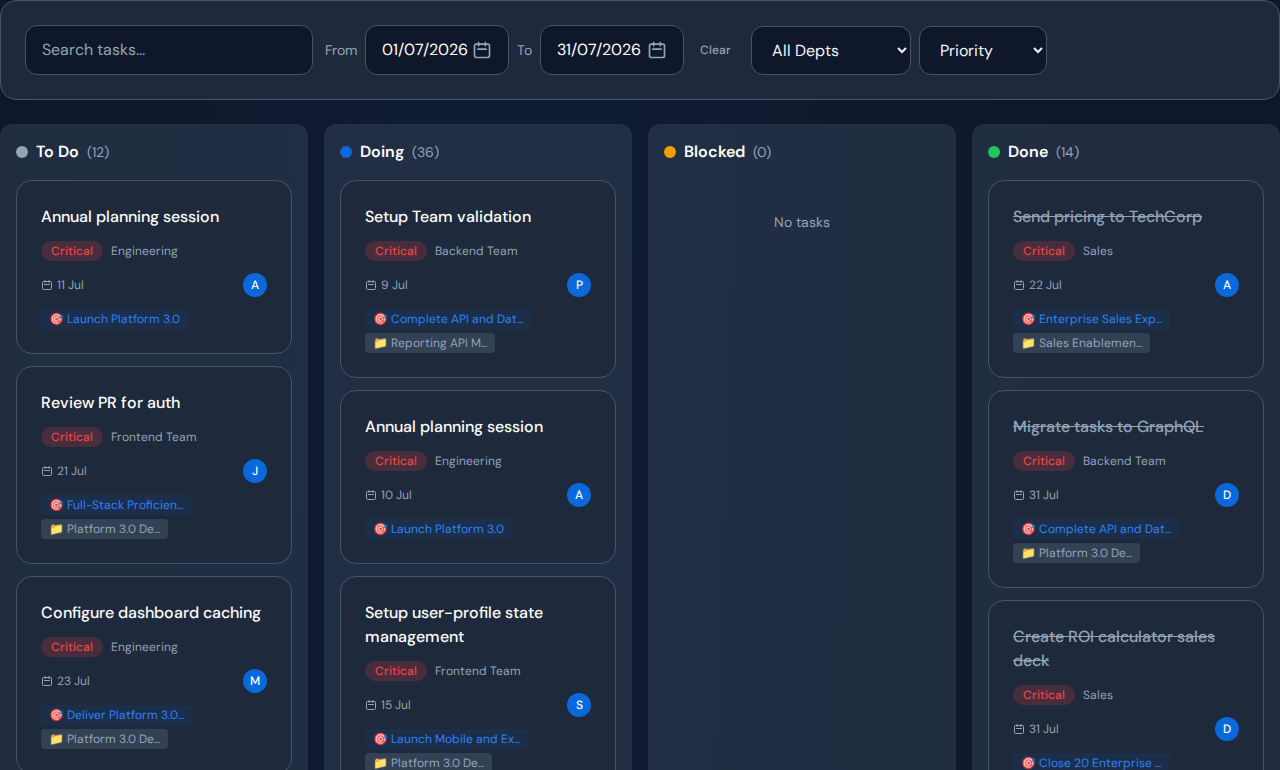
Connected task flow in Commandix for headcount decision, showing Sample tasks retain owner, project, goal, priority, dependency, and blocker context.
Connected task flowSample tasks retain owner, project, goal, priority, dependency, and blocker context.

Compare the plausible responses#

EvidenceLikely responseCheck next
Ready, prioritized work waits behind a scarce skillHire, contract, train, or reallocate capacityQueue age and completed valuable work
Inputs are repeatedly incompleteChange the intake or release ruleRework and return rate
Many initiatives compete for the same peopleReduce work in progress and resequenceActive items and cycle time
Work waits for authorityChange the approval pathApproval wait time

Write a testable decision record#

Record the current queue, wait time, active load, service expectation, and result measure. State the proposed action and what should change if the explanation is right. If leadership approves a role, specify which work it will absorb and when the first signal should be reviewed. If leadership changes intake or priorities instead, use the same baseline.

The purpose is not to delay hiring. It is to distinguish a capacity decision from a workflow, priority, or data decision. A strong review can approve the role faster because the evidence and expected return are explicit. It can also protect a team from being blamed for demand and policy choices it does not control.

Current explanation and evidence in Commandix for headcount decision, showing Sample analysis keeps the candidate explanation, confidence, affected work, and action choices.
Current explanation and evidenceSample analysis keeps the candidate explanation, confidence, affected work, and action choices together.

Run a two-week capacity test before the permanent decision#

When the decision date allows it, protect the suspected constrained skill for a short test. Freeze new low-priority intake, prepare inputs before they reach the queue, and give the team an explicit order of work. Record interruptions rather than asking people to absorb them invisibly. The aim is to estimate how much capacity is lost to operating conditions that a new hire would not automatically fix.

Compare the baseline with the test period. Did ready work complete faster? Did queue age fall? Did the exposed business result move? If the queue remains materially above qualified capacity after avoidable demand is removed, the case for hiring becomes clearer. If performance improves sharply, leadership may still choose to hire, but it now understands which operating rules must accompany the role.

Account for the time needed to create capacity#

A hiring plan should include sourcing, notice period, onboarding, access, training, and the time current experts must spend helping the new person become productive. That last cost is easy to omit. The constrained specialist may initially lose capacity while transferring knowledge. Compare this timeline with contracting, internal training, reassignment, automation, or temporarily changing the service promise.

Do not turn this into a simplistic build-versus-buy exercise. Some work requires durable internal knowledge and authority. Other demand is temporary or can be removed. The decision record should state why the selected capacity form matches the duration, risk, and nature of the queue.

Result traceability in Commandix for headcount decision, showing Sample goal data connects an exposed result to contributing work and accountable owners.
Result traceabilitySample goal data connects an exposed result to contributing work and accountable owners.

Use a headcount evidence pack#

EvidenceWhat to includeFailure it prevents
DemandReady work by value, age, and expected arrivalHiring for work that is incomplete or optional
CapacityQualified people, protected hours, recurring dutiesTreating nominal staffing as usable capacity
FlowStarts, finishes, wait, WIP, and return rateConfusing activity with completed value
ExposureGoals, customers, projects, and dates affectedApproving a role without a business result
AlternativesStop, simplify, reallocate, contract, train, hirePresenting headcount as the only possible action

Keep the review fair to people#

A person appearing at the narrow point may be the most capable person in the system, the only authorized reviewer, or the recipient of poor-quality work. Their completion count does not explain the operating condition by itself. Review work mix, complexity, quality obligations, leave, dependencies, and managerial priority changes before drawing a conclusion.

Access to person-level views should follow role and purpose. Use the evidence to improve capacity, policy, work design, and coaching. Employment decisions require human review and information beyond a workflow system. This guardrail is not only ethical; it protects the analysis from replacing a system problem with a convenient individual story.

Project context in Commandix for headcount decision, showing Sample projects show dates, owners, linked goals, work, and portfolio context.
Project contextSample projects show dates, owners, linked goals, work, and portfolio context.

Questions for the approval meeting#

  • Which ready work will the role complete that cannot be stopped, simplified, or reassigned?
  • Which result should improve, by how much, and over what period?
  • What existing work will train or support the new person?
  • Which intake, priority, or approval rules must change as part of the decision?
  • What evidence would cause leadership to revisit the assumption that capacity is the limit?

The final answer may still be “hire now.” The difference is that leadership can explain the business result, the clean demand, the form of capacity, the operating changes, and the measure that will show whether the investment worked.

Model the headcount decision in Commandix#

Create or select the exposed result, then connect the projects and tasks that contribute to it. Confirm owners, states, dates, priorities, blockers, and dependencies. Use current workload to see who holds ready and waiting work, and use available history to compare finishes, cycle time, or queue age. Treat the identified constraint as a candidate explanation to investigate, not an automatic verdict.

Record the chosen response as an owned action. Capture the baseline appropriate to the decision: ready queue, average wait, work in progress, completed valuable work, or movement in the exposed result. If leadership runs a focus or intake test before hiring, preserve that period separately. If leadership approves headcount, include the expected ramp date and the work the new capacity should absorb.

The public sample workspace can show the navigation and decision loop, but its records are sample data and do not establish a result for another organization. A real review must use current, tenant-scoped records and the organization’s own service expectations. Start with one operating area; expanding every team before the first decision is unnecessary.

At follow-up, compare the agreed signal and note confounding changes such as a demand spike, priority override, leave, or altered scope. Decide whether to continue, change the response, collect better data, or stop. This closes the financial decision with operating evidence instead of treating approval as the end of the analysis.

Owned response and follow-up in Commandix for headcount decision, showing Sample actions make the response, owner, expected signal, and next review explicit.
Owned response and follow-upSample actions make the response, owner, expected signal, and next review explicit.

How to use this guide responsibly#

Treat the guide as a decision structure, not as proof that one cause applies in every company. Begin with a named result and current records. Separate observations from explanations, keep plausible alternatives visible, and scale the response to the confidence of the evidence. A short reversible test is often more informative than a broad rollout based on an attractive story.

Commandix organizes operating evidence and the action history; it does not guarantee a root cause or business outcome. Source data may be incomplete, stale, or shaped by different workflow definitions. Validate important records with the people doing the work. Keep personal, customer, commercial, and security information within the access and retention rules appropriate to the organization.

Use sample screenshots and the public sample workspace to inspect the interface only. They contain illustrative data. A live review should state its evidence period, included systems, gaps, baseline, action owner, expected signal, and next decision date. If the records cannot support the decision, stop with a data-readiness action. That is a useful management outcome, not a failed analysis.

Frequently asked questions#

What evidence supports a headcount request?#

Show prioritized demand, qualified capacity, queue age, work in progress, rework, service expectations, and the expected result of adding the role.

Does a large backlog prove a team needs more people?#

No. A backlog can also come from weak intake, too many active priorities, dependencies, or work that should not have entered the queue.

What should leadership decide after the review?#

Hire, reallocate, repair intake, reduce work in progress, change a policy, or collect better data before deciding.

See it in Commandix

See performance with the operating context intact.

Move from department signal to people, workload, blockers, and responsible work in the live Commandix workspace.
Review one delayed result
Back to all Commandix articles