OKR execution
OKR Goal Tracking Software: Make Goals Impossible to Ignore and Easy to Execute
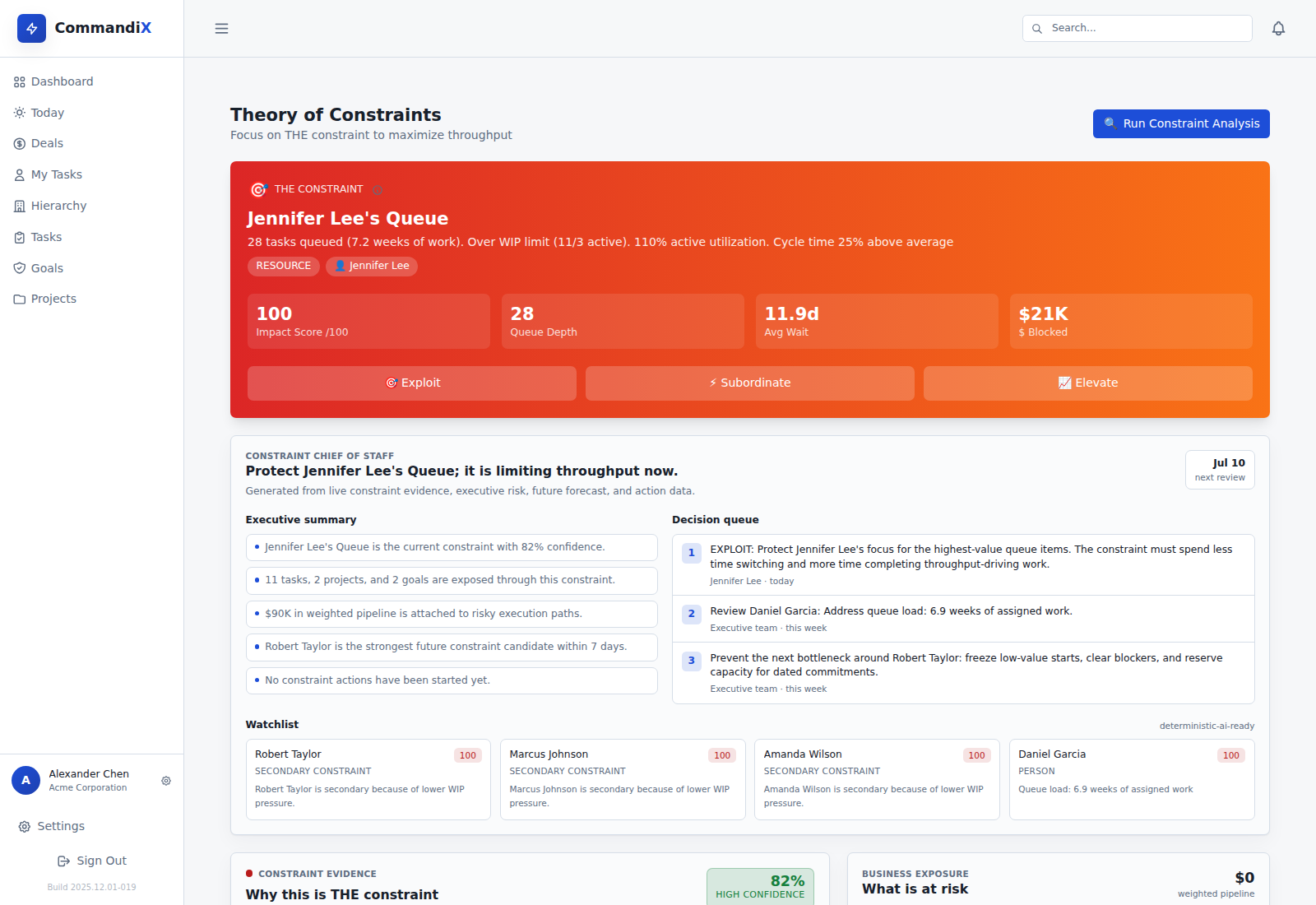
OKR goal tracking software should connect objectives to weighted tasks, owners, projects, units, and constraints so progress becomes operational.
OKR goal tracking software should make goals impossible to ignore and easy to execute. That sounds obvious, but most goal systems stop too early. They show objectives, key results, confidence scores, and progress bars. The leadership team nods. The company feels aligned. Then Monday arrives and people return to the work tools where the goals barely exist.
The problem is not OKRs. The problem is gravity. Daily work pulls people away from strategic intent unless the goal is wired into projects, tasks, owners, and review rhythms. A goal that cannot be opened into execution is not a management system. It is a slogan with a percentage.
What goal tracking must prove
A strong goal system must prove three things. First, the goal is clear. Everyone can understand the result and the measurement. Second, the goal is owned. A person or unit is accountable for moving it. Third, the goal is operational. There is real work attached to it, and that work has status, priority, owners, due dates, and blockers.
Without the third proof, progress becomes subjective. A manager can say the goal is on track, but the work may be blocked. A team can report confidence, but the project may depend on one overloaded specialist. A revenue goal can look alive, but the sales tasks behind it may be overdue.
Weighted tasks make progress honest
One of the strongest ways to make goal progress more honest is to connect it to weighted execution work. Not every task moves the goal equally. A strategic customer launch task may matter more than a minor admin update. A product readiness milestone may matter more than a cosmetic change. When task weights are visible, progress becomes less about activity count and more about contribution.
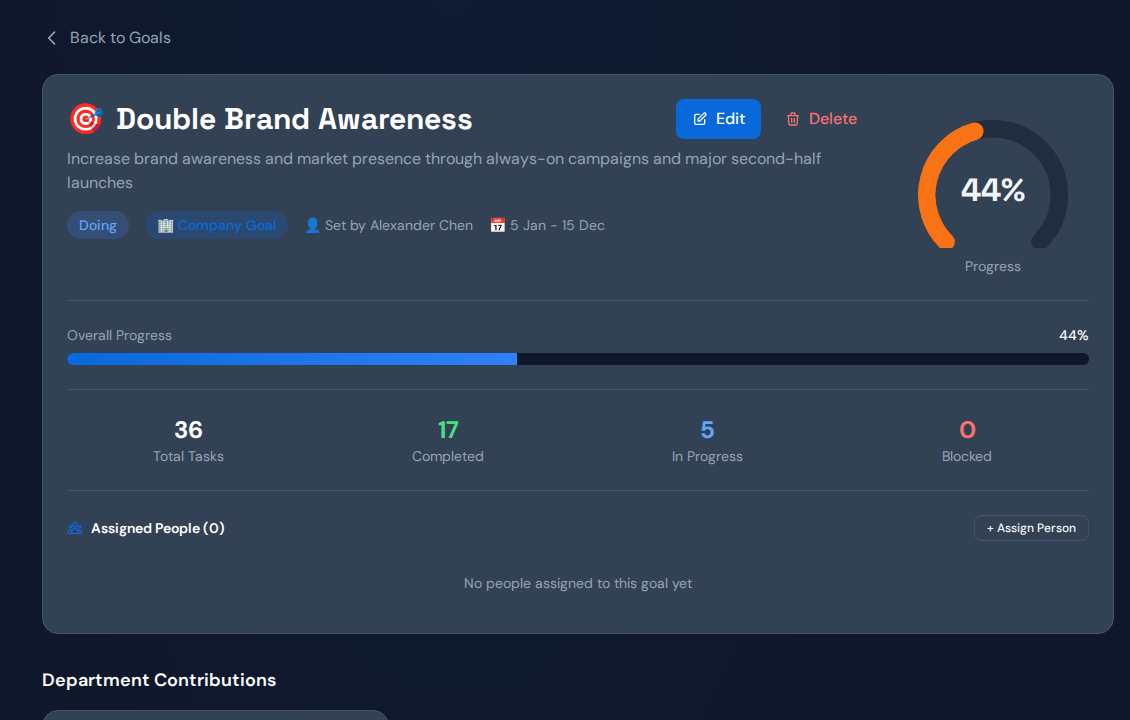
Commandix supports this kind of traceability. A goal detail page can show the execution work that moves the goal, not just a human-entered status. That gives leaders a better review. Instead of asking why progress is 48 percent, they can open the work that makes up the progress and inspect what is blocked, overdue, or missing.
Why goals need constraints
Every important goal has a constraint. The constraint may be market demand, sales follow-up, implementation capacity, engineering review, decision speed, budget, or focus. If the goal review never names the constraint, the company is left with cheerfulness and hope.
Constraint-aware goal tracking is different. It asks which part of the system is most likely to stop the objective from moving. Then it gives leaders a way to act. Exploit the constraint. Subordinate lower-value work. Elevate capacity if needed. Review whether throughput improved. This makes OKR tracking much more alive.
The business benefit
The value for the business is alignment that survives contact with the week. People do not have to remember the strategy because the work itself carries the strategy. Managers do not have to invent status because the system shows goal-linked execution. Executives do not have to wait until the quarter-end miss because the constraints appear sooner.
That creates energy. Teams can see how their tasks contribute to the goal. Leaders can see which goals are underpowered. The company gets a shared language for progress: not vibes, not slide polish, but actual movement.
A better OKR review
Run the review in five steps. Open the goal. Inspect the weighted tasks and linked projects. Identify blocked or overdue work. Name the current constraint. Assign one action that changes the system. That is it. No wandering status parade. No guessing. No hiding behind green labels that nobody believes.
The next week, review whether the action moved the goal. If it did, keep going. If it did not, refine the constraint hypothesis. This is how OKRs stop being ceremonial and become a leadership engine.
What to demand from software
Demand more than progress bars. Demand goal-to-work traceability, owner accountability, project context, weighted tasks, department drill-down, constraint analysis, and revenue visibility. Demand a system that makes it obvious what has to happen next.
The best OKR goal tracking software does not just remind the company what it promised. It helps the company keep the promise.
Make the goal review feel like a launchpad
A great goal review should leave the team more energized than when it entered. That happens when the review produces clarity, not guilt. The team sees the objective, sees the work, sees the constraint, and leaves with a specific action that can improve the probability of success. The goal is no longer a vague pressure in the background. It becomes a living target with a path.
Commandix helps create that feeling by putting the goal close to execution evidence. Weighted tasks, linked projects, unit performance, and constraint context keep the review grounded. Leaders do not have to choose between inspiration and operational truth. They can have both.
The value in one sentence
The value of OKR goal tracking software is not that it remembers the goal. The value is that it makes the business behave differently around the goal. It protects important work, reveals weak ownership, exposes blocked progress, and gives leaders an action path before the quarter is gone.
That is the standard worth buying for. If a goal system cannot change execution, it is only reporting. If it can change execution, it becomes part of the company's competitive engine.
The goal quality audit
Audit every important goal with six questions. Is the outcome measurable? Is the owner clear? Are the projects attached? Are the tasks weighted by contribution? Are blocked items visible? Is the current constraint named? If any answer is no, the goal is vulnerable. It may look organized in a dashboard, but the operating system behind it is weak.
This audit is energizing because it turns vague frustration into a fix list. A goal without projects needs an execution plan. A goal with too many overdue tasks needs a capacity conversation. A goal with one overloaded owner needs subordination or elevation. A goal with no constraint hypothesis needs a sharper review.
The audit also improves communication. Teams stop hearing generic pressure about "moving the OKRs" and start hearing the exact operating move required. Finish these weighted tasks. Clear this dependency. Protect this owner. Remove this blocker. That level of specificity makes goals feel possible again because the work is no longer hidden behind a percentage.
Commandix helps leaders run that audit without losing the thread. The goal view connects to tasks, projects, units, and constraint context. That means progress is not just a number. It is a story the business can inspect. When leaders can inspect the story, they can improve it. That is how goal tracking becomes a growth engine instead of a quarterly ritual.
The moment goal tracking starts to matter
Goal tracking starts to matter when it changes what happens on Tuesday morning. If Monday's review identifies a weak objective, Tuesday should show different work: a blocked task escalated, a project owner clarified, a low-value request paused, or a constrained team protected from distraction.
That is the line between reporting and execution. Reporting tells leaders a goal is behind. Execution changes the system so the goal has a better chance of moving. Commandix is built around that second idea. Goals are connected to tasks, projects, units, and constraints so the review can produce a real operating move.
The business value is simple and powerful: fewer goals that drift, more goals that get worked, and a leadership team that can intervene before the quarter becomes a story about what should have happened.
For teams, this makes goals feel less like executive decoration and more like daily direction. A designer can see which work contributes to the launch goal. A seller can see which follow-up supports the revenue goal. A manager can see whether the team is spending capacity on the outcomes the company promised. That clarity creates commitment because people understand the line between their work and the business result.
For executives, it creates earlier intervention. Instead of waiting for a red progress bar at the end of the month, leaders can inspect the goal's work system while there is still time to clear blockers, protect owners, and improve throughput.
That is why goal tracking deserves a stronger role in the company. Done well, it is not a scoreboard. It is a steering system for attention, ownership, and constraint removal.
And when the steering system is trusted, teams stop treating OKRs as quarterly paperwork and start using them as a weekly path to business progress.
Frequently asked questions
What should OKR goal tracking software include?
It should include objectives, key results, progress, owners, projects, weighted tasks, operating signals, and constraint visibility.
Why do OKRs fail after launch?
Many OKRs fail because the goals are not connected to the daily work, capacity, and constraints that decide execution.
Can Commandix support OKR reviews?
Yes. Commandix connects goals to projects, tasks, teams, constraints, and sales execution so reviews can move from status to action.