CommandiX Open demo

Business operating system

Business Operating System Software: What Scaling Companies Need Beyond Meetings

Business operating system software connects goals, teams, projects, tasks, constraints, and revenue so leaders can run the company from one operating rhythm.

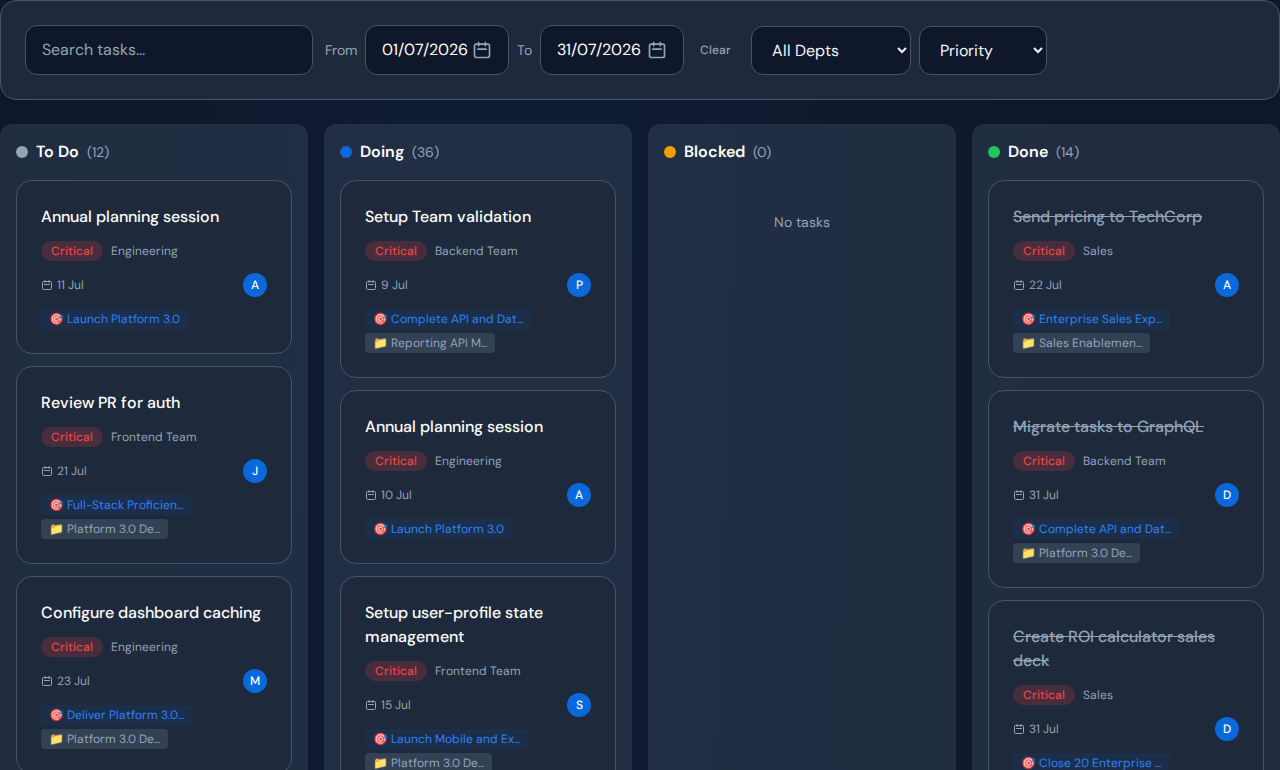
Company operating system map
Company operating system mapA generated map of the execution system: goals, organization, projects, work, revenue, and constraints.

Business operating system software should do what meetings alone cannot: connect the promise of strategy to the proof of execution. A scaling company can have a strong leadership team, a clear vision, and a disciplined meeting rhythm, yet still lose momentum because the operating truth is scattered across slides, spreadsheets, CRMs, task boards, and private updates.

The result is familiar. Leaders spend too much time collecting status. Managers spend too much time preparing status. Teams spend too much time explaining why the same goals are still not moving. A real business operating system changes that. It gives the company one place to see goals, teams, projects, tasks, constraints, and revenue together.

Why meetings are not enough

Meetings can create alignment, but they cannot maintain truth by themselves. A weekly leadership meeting is only as good as the data brought into it. If every department arrives with its own version of progress, the meeting becomes negotiation. The loudest update wins. The clearest slide wins. The underlying execution system remains hidden.

Software should not replace leadership judgment. It should make judgment better. It should bring the operating facts into the room: which goals are moving, which projects are stuck, which teams are overloaded, which tasks are overdue, which revenue opportunities need action, and where the constraint is limiting throughput.

The components of a real operating system

The first component is strategy. Goals must be visible, measurable, and connected to actual work. The second is organization. Departments, teams, and people need clear accountability. The third is project execution. Strategic initiatives require owners, collaborators, due dates, and task patterns. The fourth is daily work. Tasks must show status, priority, blockers, and ownership. The fifth is revenue. Pipeline and sales execution cannot be isolated from operations. The sixth is constraint analysis. Leaders need to know what is limiting the system right now.

If any component is missing, the operating system leaks. Goals without tasks become wishes. Tasks without goals become activity. Revenue without execution becomes forecast theater. Projects without constraints become overload. Organization without drill-down becomes a chart nobody uses.

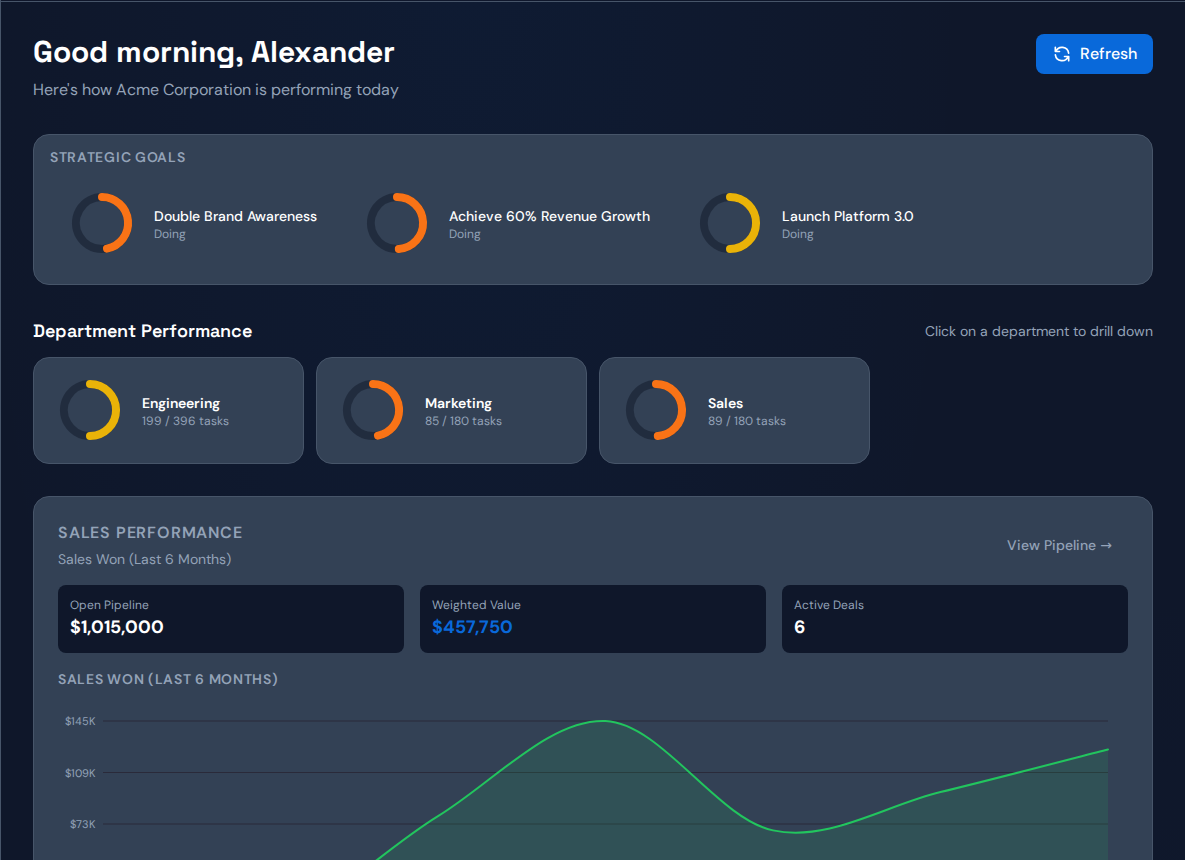
Business operating dashboard
Business operating dashboardA single view of goals, departments, revenue, and execution signals.

How Commandix fits

Commandix is designed as an enterprise execution command center. It starts with the company dashboard, then lets leaders drill into departments, teams, people, projects, tasks, goals, constraints, and sales. That drill-down matters because operating systems fail when they stop at the surface. A CEO should be able to move from a weak metric to the responsible work without waiting for a manager to assemble a report.

The system also makes constraints visible. This is the missing piece in many business operating systems. It is not enough to know the score. Leaders need to know the limiting factor. If a company is missing goals because one team is overloaded, the operating system should reveal that. If revenue is stuck because follow-up work is overdue, the operating system should reveal that. If projects are fighting for the same resource, the operating system should reveal that.

The emotional benefit

The best operating system creates relief. Not laziness. Relief. It removes the constant feeling that leaders are running the company through fog. It gives managers a shared source of truth. It gives teams a clearer sense of why their work matters. It gives executives a way to focus energy instead of spraying attention across every problem at once.

That relief quickly turns into drive. When people can see the work, see the constraint, and see the next action, execution becomes less mystical. The company stops relying on heroic memory and starts relying on a system.

Organization map
Organization mapStructure the company so accountability is visible.

What to look for when buying

Look for connection. Can the tool connect goals to projects and tasks? Look for accountability. Can leaders drill into owners, teams, and departments? Look for operating rhythm. Can the system support weekly reviews and daily focus? Look for revenue context. Can sales execution sit beside the rest of the company? Look for constraints. Can the system show what is limiting throughput, not just what is late?

Also look for enterprise foundations: tenant isolation, roles, audit logging, MFA, OAuth, password policies, and session controls. Leadership data is sensitive. A toy task list is not enough when the system contains strategy, people performance, sales activity, and operational risk.

Goals system
Goals systemConnect goals to owners, progress, and execution work.

How to start

Begin with one operating review. Put the company's top three goals in the system. Connect each goal to projects and tasks. Add the departments and owners responsible for movement. Then review the command center weekly. Ask what moved, what is stuck, where the constraint is, and what action will improve throughput.

A business operating system is not valuable because it stores information. It is valuable because it changes the rhythm of leadership. It replaces scattered status with focused action. It gives the company a spine. When that happens, the business feels different: calmer, sharper, more honest, and much harder to knock off course.

Why the operating system becomes more valuable as the company scales

Small companies can run on memory for a while. The founder knows the deals, the projects, the people, and the problems. Growth breaks that model. More teams create more handoffs. More customers create more follow-up. More projects create more shared constraints. More leaders create more versions of the truth.

A business operating system becomes valuable because it reduces the coordination tax of scale. It gives the company one place to see what matters, who owns it, where work is waiting, and which constraint deserves attention. That clarity protects speed as the organization gets larger.

Project portfolio
Project portfolioTrack strategic initiatives as part of the operating rhythm.

What enterprise buyers should demand

Enterprise buyers should demand more than a nice meeting agenda. They should demand traceability, security, roles, auditability, useful dashboards, strong mobile usability, and enough operating depth to support real decisions. The system should help a leader move from company signal to department evidence to person or project context without breaking the thread.

Commandix is moving toward that standard: a command center for goals, work, teams, revenue, and constraints. The value is a leadership rhythm that feels modern, evidence-based, and decisive. The company gets less fog and more forward motion.

The implementation pattern that sticks

The operating system sticks when it becomes the place where leaders actually run the business. Start with the leadership team, not the whole company. Put the top goals, active strategic projects, department ownership, constraint actions, and revenue work into the system. Run the weekly meeting from that view for four weeks. Do not allow shadow status decks to replace the operating truth.

After the first month, expand to department reviews. Each team should connect its work to goals, show blocked and overdue tasks, and name its candidate constraint. The company will quickly learn where the old operating system was leaking. Maybe goals were not connected to work. Maybe projects were over-approved. Maybe sales work was invisible. Maybe managers were protecting overload because they had no clean way to show it.

Commandix gives that rollout a practical path. It is specific enough to create discipline and broad enough to connect the company. The benefit is not a prettier meeting. The benefit is a business that can see itself clearly, choose leverage faster, and keep moving when complexity rises.

Today focus
Today focusTurn the operating system into daily focus, not just quarterly review.

The transformation leaders actually want

Leaders do not want another system for its own sake. They want the business to feel more controllable. They want fewer surprise misses, fewer vague updates, fewer meetings that end with unclear ownership, and fewer strategic goals drifting away from daily work. A business operating system earns its keep only when it changes those outcomes.

Commandix aims at that practical transformation. The system connects the leadership view to the operating evidence: goals, teams, projects, tasks, revenue, and constraints. That connection lets leaders move from "something is wrong" to "this is the next action" faster.

The emotional shift is important. A company with a strong operating system feels calmer because the truth is easier to find. It also feels more ambitious because people trust the rhythm. They can see the work, the owner, the constraint, and the path to improvement.

The implementation should be measured by behavior. Are leaders opening the command center before asking for status? Are managers linking work to goals instead of maintaining private task lists? Are sales and delivery conversations happening with the same operating facts? Are constraint actions reviewed until the system improves? Those behaviors are the real adoption metrics.

When they appear, the software stops feeling like software. It becomes how the company thinks. That is the standard a scaling business should demand from any operating system it brings into the leadership rhythm.

Frequently asked questions

What is business operating system software?

It is software that connects strategy, organization, projects, tasks, meetings, metrics, constraints, and accountability into one operating rhythm.

Is this the same as EOS software?

It can support similar operating needs, but Commandix focuses on execution data, constraints, tasks, goals, projects, and revenue visibility.

Who needs it?

Scaling companies whose strategy, work, and accountability are spread across meetings, spreadsheets, task tools, and disconnected dashboards.

See the operating system behind the article.Open Commandix demo