The Minimum Data Needed for a Useful Delay Analysis

A data-readiness checklist for analyzing delayed work without manufacturing certainty from missing owners, dates, states, dependencies, or history.

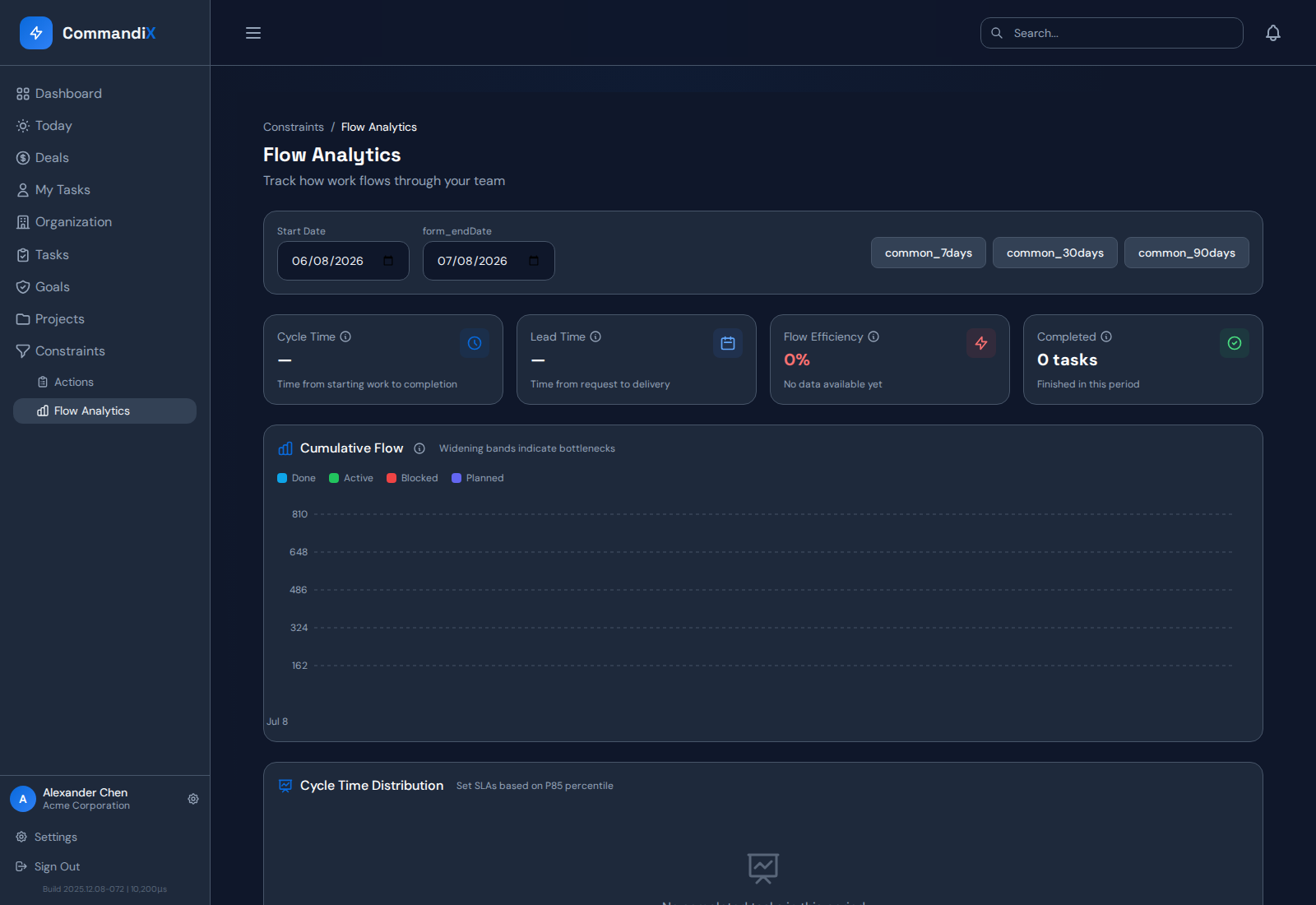
Workload and flow evidence in Commandix for data readiness, showing Sample data shows current load, queues, waiting work, and completed flow in one review.
Workload and flow evidenceSample data shows current load, queues, waiting work, and completed flow in one review.
On this page

Key takeaways

  • Useful analysis needs traceability from a result to work, owners, states, dates, and dependencies.
  • Missing history should reduce confidence, not produce a more dramatic claim.
  • A data-readiness report is a valid outcome when the records cannot support the decision.

Teams often ask for analysis before their work records can answer the management question. The wrong response is to fill the gaps with confident language. The right response is to identify what can be said now, what remains unknown, and the smallest change that will make the next review useful.

Data readiness is not a generic cleanup project. It is readiness for a specific decision about a delayed result.

Define the decision first#

Write the result that is late or exposed, the decision date, and the responses leadership is considering. A headcount decision needs different evidence from a customer-onboarding handoff or a project-priority decision. The data requirement follows the decision.

Collect the minimum useful record#

RecordMinimum fieldQuestion supported
ResultOwner, measure, target, dateWhat is at risk?
WorkItem, owner, state, created and changed datesWhere is work now?
RelationshipsResult, project, task, team, deal, or customer linksWhich work contributes to the result?
WaitingBlocker, dependency, queue, or approval reasonWhy can the work not proceed?
PriorityAgreed order or class of serviceIs the system working on the intended items?

Names alone are not enough. State definitions must be consistent enough to distinguish active work from waiting. Dates must represent actual events rather than repeatedly edited promises. Owners must reflect who can move the next step, not merely the person reporting status.

Match confidence to the evidence#

Current task counts can describe current load. They cannot prove a historical trend. A cumulative flow diagram needs state history. Cycle-time comparisons need reliable start and finish events. A linked dependency can support a handoff hypothesis, but it does not prove causation by itself.

Record alternative explanations that the available data cannot yet eliminate. This is especially important when a person or team appears in the narrow point. High load may reflect scarce skill, poor inputs, quality protection, or an upstream policy.

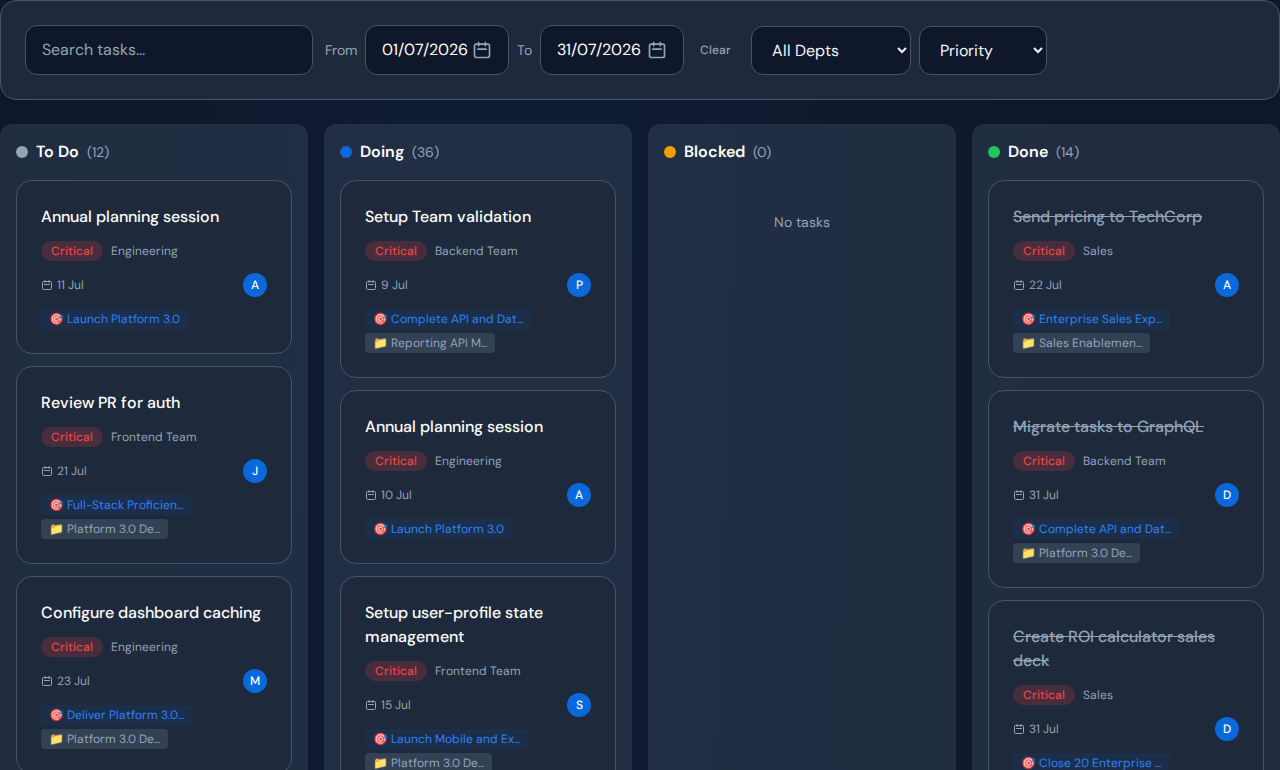
Connected task flow in Commandix for data readiness, showing Sample tasks retain owner, project, goal, priority, dependency, and blocker context.
Connected task flowSample tasks retain owner, project, goal, priority, dependency, and blocker context.

Return a decision, even when the answer is “not yet”#

If the minimum record is missing, name the gap, the owner who will repair it, the collection period, and the review date. For example: require owner and blocked-reason fields on onboarding tasks for two weeks, then compare technical-review queue age with customer dates.

This is more useful than a speculative diagnosis. It also keeps data collection proportionate. The goal is not to model the entire company before acting. The goal is to create enough evidence for one important decision, then improve the record as the operating loop repeats.

Define states and timestamps before calculating flow#

Two teams can both use “in progress” while meaning different things. One includes waiting for review; another moves waiting work to blocked. Before comparing cycle time or queue age, document the state definitions and the events that create each timestamp. Avoid silently treating a due date as a completion event or a last-edited time as the start of work.

When source systems differ, keep the source state and map it to a small common model such as planned, active, waiting, and done. Preserve the original value for investigation. Record changes to the mapping because a trend can move when definitions change even if operations do not.

Current explanation and evidence in Commandix for data readiness, showing Sample analysis keeps the candidate explanation, confidence, affected work, and action choices together.
Current explanation and evidenceSample analysis keeps the candidate explanation, confidence, affected work, and action choices together.

Assess completeness, consistency, timeliness, and linkage#

Quality dimensionTestDecision risk
CompletenessRequired owners, states, dates, and links are presentMissing work may make a queue look smaller
ConsistencyTeams use fields and states with comparable meaningsDifferences may reflect process definitions
TimelinessRecords are updated close to the real eventCurrent load and age may be stale
LinkageWork connects to the relevant result, project, deal, or customerOperational delay may lack business meaning
HistoryState transitions and key changes are retainedTrend and cycle claims may be unsupported

Sample the record instead of trusting a percentage#

A dashboard may report 95 percent field completeness while the missing five percent contains the most important work. Select examples from high-value, overdue, blocked, and recently completed items. Ask owners whether the record reflects what actually happened. Note systematic gaps, such as dependencies stored only in comments or dates overwritten rather than historized.

Document the sample and its limits. A small targeted review can identify a data problem, but it should not be described as a statistically representative audit unless the method supports that claim.

Result traceability in Commandix for data readiness, showing Sample goal data connects an exposed result to contributing work and accountable owners.
Result traceabilitySample goal data connects an exposed result to contributing work and accountable owners.

Handle personal and performance data carefully#

Collect only fields needed for the operating decision. Restrict access according to role and purpose. A low task count is not a complete performance assessment; work complexity, quality, leave, dependencies, workload, and managerial choices matter. Use person-level signals to investigate system conditions and support human review, not to automate employment decisions.

Record where identity and work data originate, how long the analysis needs them, and which administrators can create mappings. For directory-assisted user creation, basic profile lookup and selected import are more proportionate than broad directory write privileges.

Use a confidence statement#

Every analysis should state the evidence period, included systems, missing records, mapping assumptions, and alternative explanations. Use plain language: “current data supports a moderate-confidence queue hypothesis; historical state data is insufficient to compare cycle time.” This makes the output more useful than a score whose basis buyers cannot inspect.

Confidence should change the response. High-confidence clean demand at a constrained skill may support capacity action. Low-confidence records may support a two-week instrumentation step. The software can help organize the evidence, but leadership owns the decision.

Project context in Commandix for data readiness, showing Sample projects show dates, owners, linked goals, work, and portfolio context.
Project contextSample projects show dates, owners, linked goals, work, and portfolio context.

A practical readiness scorecard#

  • Can we name the result, owner, target, and decision date?
  • Can we trace the relevant work across systems without manual guesswork?
  • Do owners, states, timestamps, blockers, and dependencies reflect current reality?
  • Do we have enough history for the trend or flow claim being considered?
  • Can we explain who may see person-level records and why?
  • Can we name the missing data that could change the conclusion?

If any answer is no, record the gap rather than hiding it. Data readiness is complete when the records are sufficient for the scoped decision—not when every system in the company is perfectly integrated.

Stage the data-readiness work in Commandix#

Begin with the smallest scope that contains the result and its relevant work. Create or import the owners, goals, projects, tasks, and relationships needed for that decision. Where a source connection is available and approved, map explicit projects or scopes rather than ingesting every accessible record. Keep source identifiers so a reviewer can trace the evidence back.

For Microsoft Entra ID, the proportionate user-creation path is search and select: an authorized administrator searches basic directory profiles, ticks specific users, and adds only those selected people to Commandix. It should not require directory write access. Jira and GitLab connections should use read-focused provider scopes, explicit project mappings, controlled webhooks, and acceptance checks before public availability is claimed.

After import, sample the most important records with their owners. Validate state mappings, dates, blockers, dependencies, and links to the result. Record fields that are absent or unreliable and state which analysis they prevent. A current workload view may still be useful while historical flow remains unavailable.

Run the scoped review only at the confidence the records support. Preserve the readiness decision, changes made, collection period, and next check. This creates a gradual path from manual evidence to connected operations without turning integration completeness into a prerequisite for every management decision.

Owned response and follow-up in Commandix for data readiness, showing Sample actions make the response, owner, expected signal, and next review explicit.
Owned response and follow-upSample actions make the response, owner, expected signal, and next review explicit.

How to use this guide responsibly#

Treat the guide as a decision structure, not as proof that one cause applies in every company. Begin with a named result and current records. Separate observations from explanations, keep plausible alternatives visible, and scale the response to the confidence of the evidence. A short reversible test is often more informative than a broad rollout based on an attractive story.

Commandix organizes operating evidence and the action history; it does not guarantee a root cause or business outcome. Source data may be incomplete, stale, or shaped by different workflow definitions. Validate important records with the people doing the work. Keep personal, customer, commercial, and security information within the access and retention rules appropriate to the organization.

Use sample screenshots and the public sample workspace to inspect the interface only. They contain illustrative data. A live review should state its evidence period, included systems, gaps, baseline, action owner, expected signal, and next decision date. If the records cannot support the decision, stop with a data-readiness action. That is a useful management outcome, not a failed analysis.

Frequently asked questions#

What is the minimum record for delay analysis?#

Start with the result, work item, owner, current state, relevant dates, dependencies or blockers, and links between the result and its work.

Do we need perfect historical data?#

No. Current-state analysis can still be useful, but claims about trends, cycle time, and causation must remain limited until history accumulates.

What happens when the data is not ready?#

Return a data-readiness decision that names the missing fields, owner, collection period, and management question that cannot yet be answered.

See it in Commandix

See the constraint, the evidence, and the next action.

Open the Commandix workspace to inspect the current constraint, owner, action, workload, and throughput signals.
Review one delayed result
Back to all Commandix articles