How to Run a 30-Minute Leadership Delay Review

A focused agenda for taking one delayed result from competing explanations to an owned action, baseline, and follow-up signal in 30 minutes.

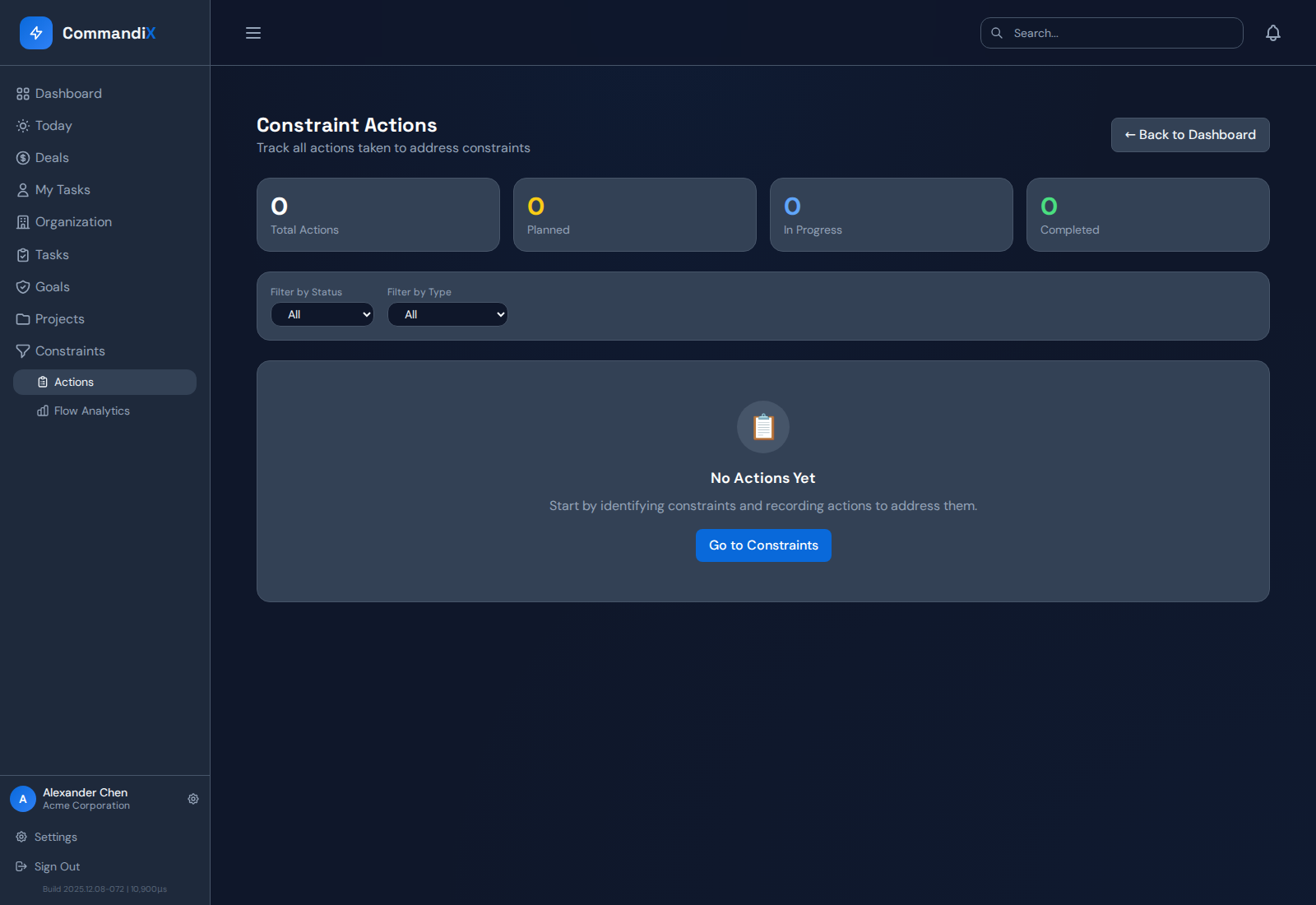
Workload and flow evidence in Commandix for leadership review agenda, showing Sample data shows current load, queues, waiting work, and completed flow in one review.
Workload and flow evidenceSample data shows current load, queues, waiting work, and completed flow in one review.
On this page

Key takeaways

  • Bring one delayed result and the decision leadership must make.
  • Separate observed evidence from explanation and proposed response.
  • Leave with one owned action and one signal to inspect next.

Most operating reviews cover too much. They move from project to project, collect updates, and end with a long action list. A delay review has a narrower job: improve one consequential management decision while there is still time to affect the result.

Thirty minutes is enough when the records are prepared and the participants can change the system. It is not enough for live data collection or a general portfolio status meeting.

Before the meeting#

The result owner writes a one-page record: result and target, current position, next decision date, work and teams involved, observed waiting or blocked conditions, current systems, and the actions under consideration. Include links to the underlying records. Label examples and screenshots as sample data when they are not from the live situation.

Invite only the people needed to interpret the evidence and authorize an action. Send the record early enough for factual corrections. Do not ask each department to prepare a presentation.

Minute 0–5: state the decision#

Name the delayed result and the choice that cannot wait. For example: approve another implementation role, reduce active launches, change the intake rule, or alter an approval path. Confirm the next date at which the decision becomes harder or more costly.

Minute 5–15: inspect the evidence#

Trace the result into relevant projects, tasks, deals, owners, dates, states, queues, blockers, dependencies, and workload. Distinguish observations from explanations. “Seven items wait in technical review” is an observation. “The technical reviewer is the cause” is an explanation that still needs context.

Ask what evidence would disprove the current explanation. Check input quality, priority changes, upstream delay, policy, and whether the records are complete enough to support the decision.

Connected task flow in Commandix for leadership review agenda, showing Sample tasks retain owner, project, goal, priority, dependency, and blocker context.
Connected task flowSample tasks retain owner, project, goal, priority, dependency, and blocker context.

Minute 15–23: compare responses#

Put the plausible responses beside the evidence. More capacity fits clean demand waiting behind scarce skill. Reduced work in progress fits overloaded shared capacity. A changed intake rule fits rework and incomplete inputs. A changed approval path fits ready work waiting for authority.

Choose one action small enough to observe. If the data is inadequate, choose a data-readiness action instead of manufacturing certainty.

Minute 23–30: record the test#

FieldExample
ActionRequire complete technical inputs before onboarding review
OwnerHead of Delivery
BaselineSeven waiting items; median wait six days
Expected signalFewer returns and lower review wait
Review dateNext weekly operating review

End by naming what will not change. An action has little chance when lower-priority work continues to consume the same capacity. Record alternatives that remain possible and the condition that would cause leadership to revisit the decision.

A strong delay review is not a promise that the first explanation is correct. It is a disciplined way to make the next action testable. Over time, the sequence—result, evidence, explanation, action, signal—turns recurring status meetings into an operating learning loop.

Current explanation and evidence in Commandix for leadership review agenda, showing Sample analysis keeps the candidate explanation, confidence, affected work, and action choices.
Current explanation and evidenceSample analysis keeps the candidate explanation, confidence, affected work, and action choices together.

Use clear roles in the room#

The result owner explains the exposure and accepts the final action. A facilitator protects the agenda and separates evidence from interpretation. People closest to the work correct facts and explain operating conditions. A decision authority can change priority, policy, sequence, or capacity. One person records the decision directly in the shared system.

These roles can be combined in a small company, but they should remain conceptually distinct. The person advocating for an explanation should not be the only person deciding what counts as evidence. Invite a data or system owner when record quality is likely to determine confidence.

Prepare a one-page review card#

SectionContents
ResultMeasure, target, current position, owner, next decision date
Observed delayQueue, wait, blocked state, missed handoff, load, or stalled milestone
Current explanationOne testable reason the result may be behind
AlternativesOther plausible causes and evidence that would distinguish them
ResponsesCapacity, priority, input, policy, coaching, or data options
TestAction, owner, baseline, expected signal, next review

Link to source records. Avoid screenshots when participants need to inspect current work, and label sample or hypothetical material clearly. Do not paste sensitive personal data into a broadly distributed meeting document.

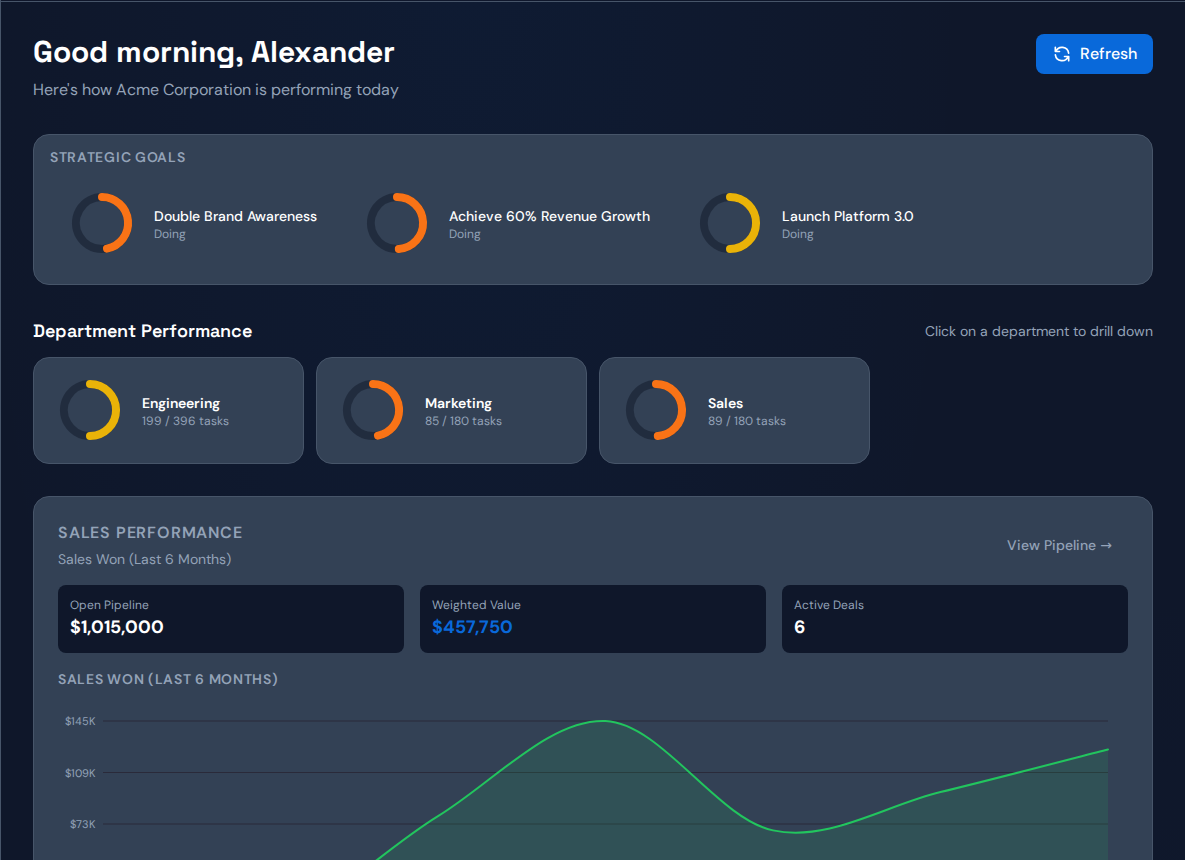
Result traceability in Commandix for leadership review agenda, showing Sample goal data connects an exposed result to contributing work and accountable owners.
Result traceabilitySample goal data connects an exposed result to contributing work and accountable owners.

Facilitate disagreement productively#

When explanations conflict, ask each participant what observation supports their view and what evidence would make them change it. Write the alternatives side by side. The meeting does not need to prove a universal root cause. It needs enough confidence to choose a proportionate next action and a signal that will teach the team.

Prevent hierarchy from turning the first executive opinion into the answer. Start with the records and invite the people who operate the process to explain exceptions. At the same time, avoid extending the meeting into an unlimited investigation. If a missing fact blocks the decision, assign its collection with a short deadline.

Choose a response the system can observe#

“Improve communication” is not a useful intervention. “Require complete implementation inputs before technical review and return incomplete requests within one business day” is observable. So is “pause two lower-priority projects for one week” or “remove director approval for orders below the agreed threshold.”

Name what the action should change. A repaired intake rule should reduce returns and queue age. Lower work in progress should improve focus and finish rate. Added capacity should increase completed ready work after ramp-up. A coaching action should change the specific behavior or result it addresses, with human judgment intact.

Close the loop at the next review#

Begin the next meeting with the previous baseline, action, and expected signal. Ask whether the action happened before asking whether the metric moved. If it happened and the signal did not change, revisit the explanation. If it did not happen, investigate the barrier to the intervention rather than changing the diagnosis immediately.

Preserve “no change” and “wrong explanation” outcomes. They are operating knowledge. A decision history that shows how leadership learned is more valuable than a dashboard where every past recommendation appears correct.

Project context in Commandix for leadership review agenda, showing Sample projects show dates, owners, linked goals, work, and portfolio context.
Project contextSample projects show dates, owners, linked goals, work, and portfolio context.

Common failure modes#

  • Covering several results and resolving none.
  • Using a red metric as if it explains its own cause.
  • Naming a person without workload, dependency, quality, and policy context.
  • Choosing several actions, making the test impossible to interpret.
  • Leaving without a baseline, owner, expected signal, or date.
  • Repeating the review without checking whether the prior action occurred.

A disciplined 30-minute review cannot guarantee the right first answer. It can make the reasoning visible, the action proportionate, and the follow-up unavoidable. That is the foundation of a leadership cadence that learns instead of merely reporting.

Support the meeting with Commandix#

Open the exposed goal, project, customer result, or revenue signal before the meeting. Link the relevant work and confirm that owners, states, dates, blockers, and dependencies are current. Prepare the evidence view, but keep source records available for drill-down. The software should shorten factual investigation, not replace the conversation among people who understand the work.

During the review, record the current explanation and alternatives. Use workload, queue, wait, project, task, deal, and flow evidence appropriate to the question. When person-level data appears, retain system context and human review. A candidate constraint is the starting point for an intervention, not a label to attach to a person.

Create one action with an owner, baseline, expected signal, and review date. Explain whether the response is to protect capacity, reduce work in progress, repair input, change approval, coach, collect data, or elevate capacity. The public sample workspace demonstrates this loop using sample records; a real decision requires the organization’s own current data.

At the next cadence, open the prior decision first. Confirm the action occurred, compare the signal, and record what else changed. Continue when the result supports the explanation, revise when it does not, and stop when the cost or evidence no longer justifies the intervention. The history becomes a practical record of management learning.

Owned response and follow-up in Commandix for leadership review agenda, showing Sample actions make the response, owner, expected signal, and next review explicit.
Owned response and follow-upSample actions make the response, owner, expected signal, and next review explicit.

How to use this guide responsibly#

Treat the guide as a decision structure, not as proof that one cause applies in every company. Begin with a named result and current records. Separate observations from explanations, keep plausible alternatives visible, and scale the response to the confidence of the evidence. A short reversible test is often more informative than a broad rollout based on an attractive story.

Commandix organizes operating evidence and the action history; it does not guarantee a root cause or business outcome. Source data may be incomplete, stale, or shaped by different workflow definitions. Validate important records with the people doing the work. Keep personal, customer, commercial, and security information within the access and retention rules appropriate to the organization.

Use sample screenshots and the public sample workspace to inspect the interface only. They contain illustrative data. A live review should state its evidence period, included systems, gaps, baseline, action owner, expected signal, and next decision date. If the records cannot support the decision, stop with a data-readiness action. That is a useful management outcome, not a failed analysis.

Frequently asked questions#

How many delayed results should one review cover?#

One. A focused review should resolve one management decision instead of collecting status on every initiative.

Who should attend?#

The result owner, people who understand the relevant work and data, and a leader authorized to change priority, policy, sequencing, or capacity.

What should the meeting produce?#

A decision record with the result, evidence, current explanation, alternatives, action, owner, baseline, next signal, and review date.

See it in Commandix

Run the weekly review from one operating picture.

Inspect goals, constraints, owners, projects, tasks, revenue, and throughput in the live Commandix workspace.
Review one delayed result
Back to all Commandix articles